
Luis Presents Research on a Universal Polymer Membrane Platform at GRC Membranes 2026
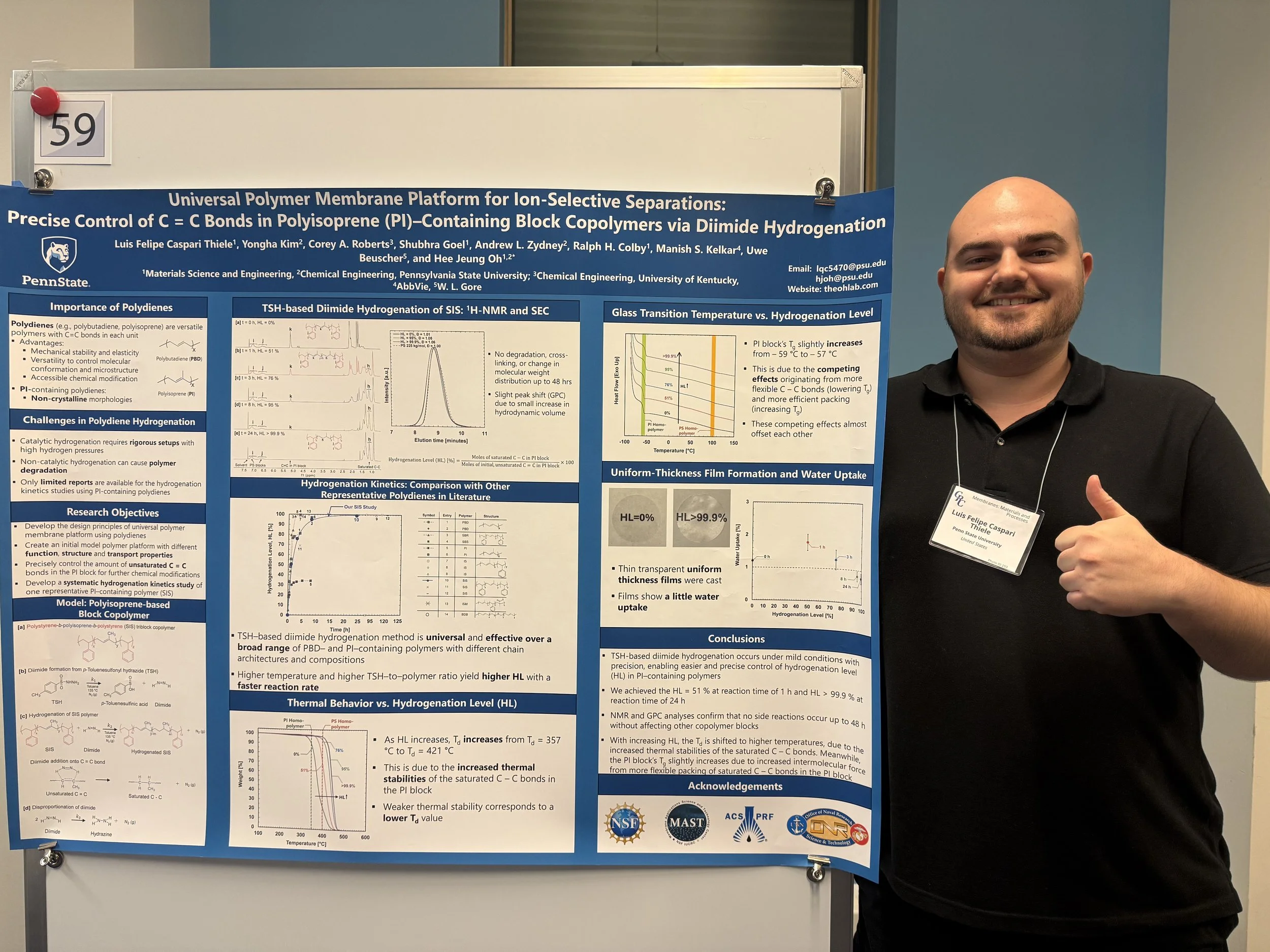
Precise Control of Polyisoprene Hydrogenation Enables Tunable Membrane Materials for Ion-Selective Separations
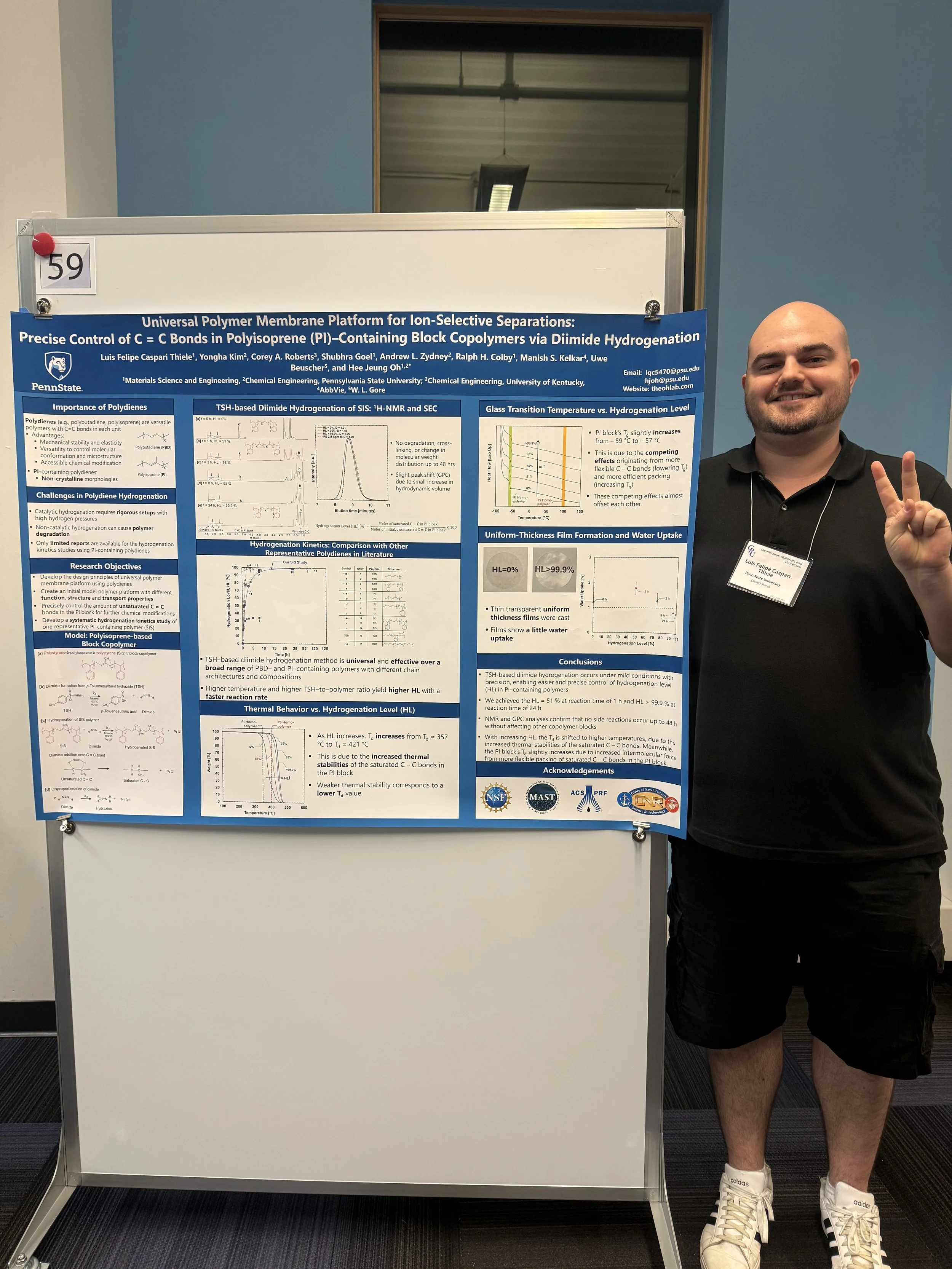
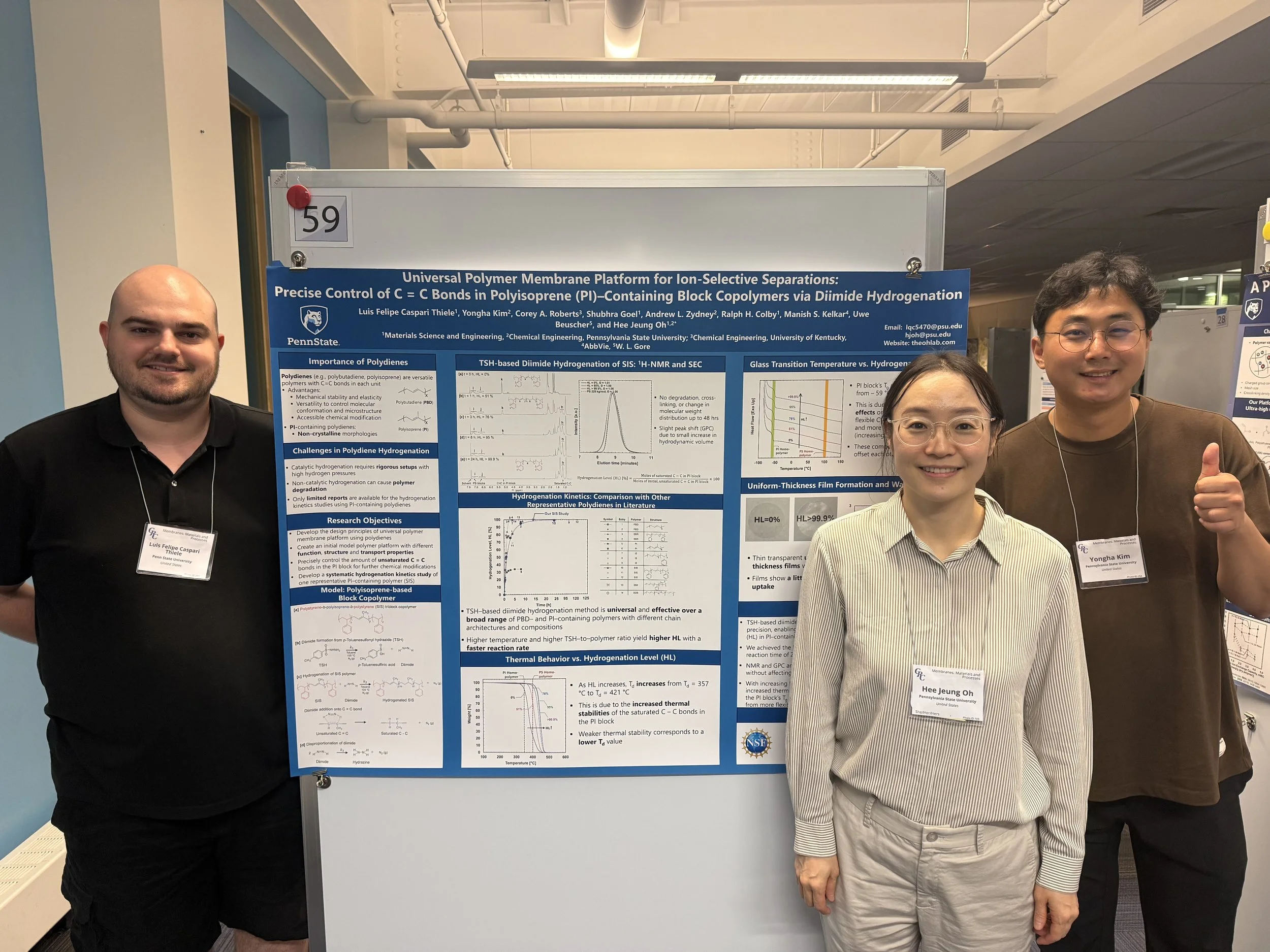
Our PhD student, Luis Felipe Caspari Thiele represented the group at the 2026 Gordon Research Conference (GRC) on Membranes: Materials & Processes, where he presented his work titled:
“Universal Polymer Membrane Platform for Ion-Selective Separations: Precise Control of C=C Bonds in Polyisoprene (PI)-Containing Block Copolymers via Diimide Hydrogenation.”
Luis's research focuses on developing a versatile polymer platform through the precise control of carbon-carbon double bonds in polyisoprene-based block copolymers using mild, non-catalytic diimide hydrogenation. By systematically tuning the degree of hydrogenation, this approach enables researchers to tailor membrane properties while maintaining well-defined polymer architectures.
The work builds upon the group's recent publication in ACS Applied Polymer Materials, which demonstrated that TSH-based diimide hydrogenation can achieve nearly complete saturation of polyisoprene blocks without side reactions and provides a simple route to targeting specific hydrogenation levels through reaction-time control. This broadly applicable strategy offers a powerful framework for designing next-generation membrane materials and exploring fundamental structure-property relationships relevant to ion-selective separations.
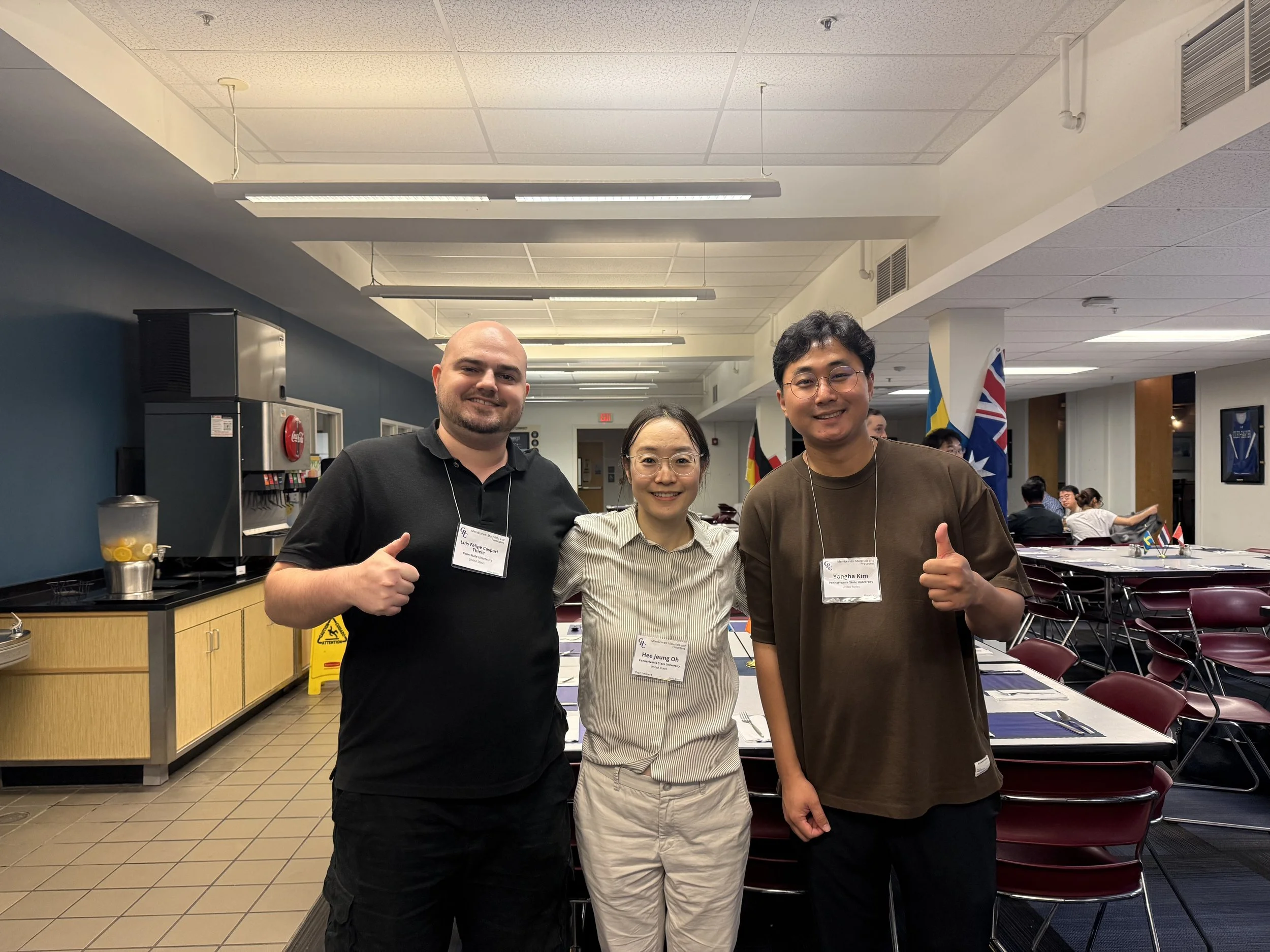
The presentation generated valuable discussions with researchers across the membrane science community and highlighted the potential of this universal polymer platform for advancing molecular-level membrane design. Congratulations to Luis on an excellent presentation and for representing the group at GRC Membranes 2026.
About our work
We design and create high-performance membranes that enable unprecedented separation opportunities. We pursue fundamental breakthroughs that translate into real-world applications, always seeking to bridge the microscopic understanding of materials with macroscopic performance. Our goal is to make separations systems cleaner, stronger, and more sustainable.

About the Oh Lab
At the Oh Lab, we are dedicated to advancing the world’s most important, but challenging, separations in the environment, energy, and health sector. We do this by focusing on the molecular-to-macroscopic design and characterization of polymer membranes. We work at the intersection of chemical engineering, materials science, and molecular transport, focusing on designing advanced polymer membranes for efficient chemical separation.